
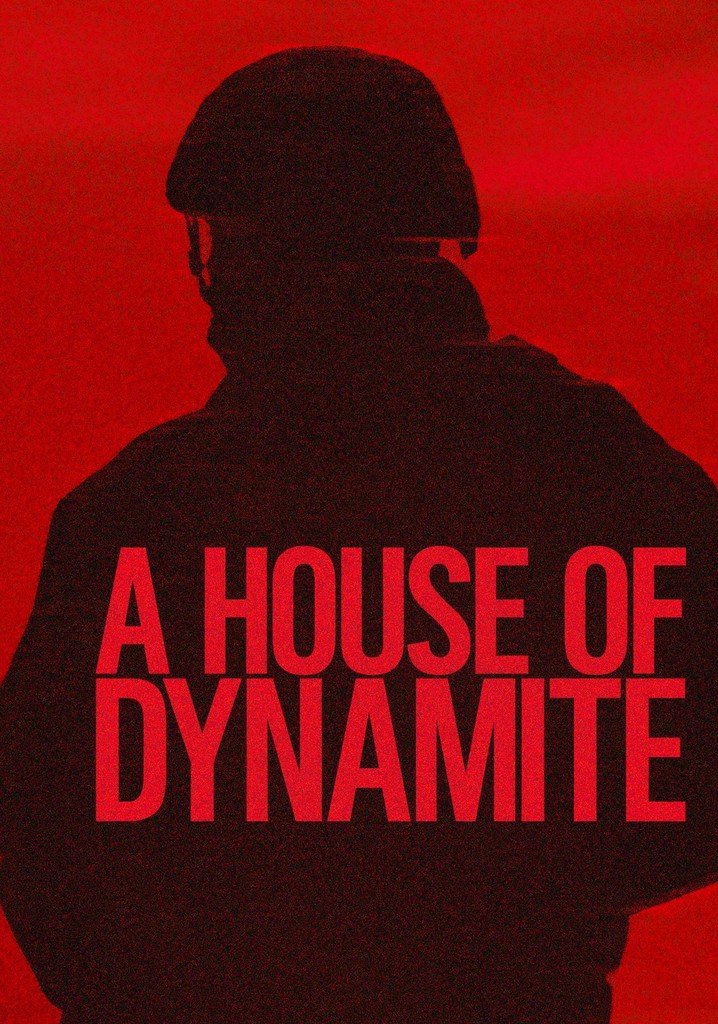
While Kathryn Bigelow is known for her realistic, fact-based films, her latest thriller, A House of Dynamite—currently Netflix’s most-watched title—is already facing scrutiny over alleged inaccuracies. As we’ll see in this article, the director responded swiftly.

The film focuses on key parts of the U.S. government as they respond to news of an incoming intercontinental ballistic missile, grappling with how to stop it and determine the global response.
You may also like ► Netflix top 10 movies today: A House of Dyamite blasts at #1

A global success
Led by Rebecca Ferguson, Jared Harris, and Idris Elba, A House of Dynamite premiered in October to strong reviews, earning 78% from critics and 77% from audiences on Rotten Tomatoes. The film quickly became a streaming hit for Netflix, maintaining its position at the top of the platform’s charts both in the U.S. and worldwide.

The Pentagon’s clarifications
However, fans of A House of Dynamite aren’t the ones raising concerns—the Pentagon is. An internal memo obtained by Bloomberg reveals that the government agency is experiencing some “anxiety” over alleged inaccuracies in the film. The document states that the government was preparing to “correct misconceptions, provide accurate facts, and a better understanding” of the country’s ground-based missile defense system, as portrayed in the Netflix thriller:
“[The film] shows that deterrence can fail, which reinforces the need for an active national missile defense system. The movie’s fictional interceptors miss the target, and we understand that this is part of the drama intended to entertain the audience, [but actual test results] tell a very different story.”

One detail the memo does not address, but which appears in the film, is the cost of ground interceptors. In the movie, Defense Secretary Reid Baker, played by Jared Harris, complains about spending $50 billion on “a damn coin toss.” The memo clarifies that while the real cost is high, it “is not comparable to the cost of allowing a nuclear missile to hit our nation.” Another point challenged by the Pentagon is the film’s claim that missiles are accurate only 61% of the time.

The memo notes the film is based on “earlier prototypes” and that modern GBI (Ground-Based Interceptors) “have demonstrated a 100% accuracy rate in tests” for over a decade. However, Laura Grego of the Union of Concerned Scientists has questioned the Pentagon’s data, while also aclnoledging some narrative simplifications in the film.
“A truly robust defense should include multiple incoming ICBMs, credible decoys, and direct attacks on missile defense system components, but none of these are part of the plot. The film’s fictional threat is probably one of the simplest possible.”
The missile defense system
In a statement to the press, the Pentagon confirmed that neither Bigelow nor any member of the creative team consulted the agency regarding the portrayal of the missile defense system. The statement emphasized that the film “does not reflect the views or priorities of this administration.”

Interestingly film’s screenwriter Noah Oppenheim challenged this version in an interview with MSNBC. Oppenheim explained that he “spoke with many missile defense experts, all named and credited,” asking them a wide range of questions about the system’s “processes” and “procedures” and how it would respond to an ICBM threat. He added that “what you see on screen is, hopefully, a fairly accurate portrayal.”
“Unfortunately, our missile defense system is far from perfect. If the Pentagon wants to open a conversation about how to improve it or what next steps could make us all safer, that’s a conversation we want to have. But what we show in the film is accurate.”
Since Bigelow, a two-time Oscar winner, is known for telling stories based on real events or set in realistic contexts, this isn’t the first time her work has faced scrutiny over factual accuracy. The Hurt Locker (2010, Best Director Oscar) was praised by veterans as a solid action film but also criticized for inaccuracies in team dynamics and war conditions. Zero Dark Thirty faced similar controversy, particularly over its depiction of torture and its portrayal of the Obama administration’s role in capturing Osama bin Laden.

Kathryn Bigelow’s Response
In an interview with The Guardian, Bigelow added that the film did not seek approval or collaboration from the Pentagon in order to preserve its independence:
“Our nuclear armoury is a fallible structure. Within it are men and women working thanklessly behind the scenes, whose competence means you and I can sit and have this conversation. But competence doesn’t mean they’re infallible.”
Currently, the United States has 44 ground-based interceptors deployed in Alaska and California. In 2020, the Pentagon awarded Northrop Grumman a $13.3 billion contract for a new generation of ground missiles, with delivery expected by 2029. Last May, Donald Trump proposed a missile system called “Golden Dome,” with space-based weapons designed to intercept attacks aimed at the United States. Also, speaking alongside screenwriter Noah Oppenheim at Hollywood Reporter, the Oscar-winning director defended her work, saying: “I just tell the truth. In this film, everything revolves around realism and authenticity.”

The Pentagon Also Takes on Netflix Over Boots
A House of Dynamite is not the first Netflix title to draw criticism by the U.S. government: earlier this month, the show Boots was called out for alleged inaccuracies. The Pentagon labeled it “woke garbage” due to its portrayal of secretly gay Marines and their exclusion from the armed forces — a reality that, while controversial in the show’s 1990s setting, was also documented in the 1970s memoir on which it was based.

Given that the Pentagon’s response to Boots further boosted its streaming success, it’s likely that A House of Dynamite will continue to dominate Netflix’s Top 10. At the same time, the film’s portrayal of the U.S. missile defense system could spark a bipartisan debate over its real-world accuracy.
