
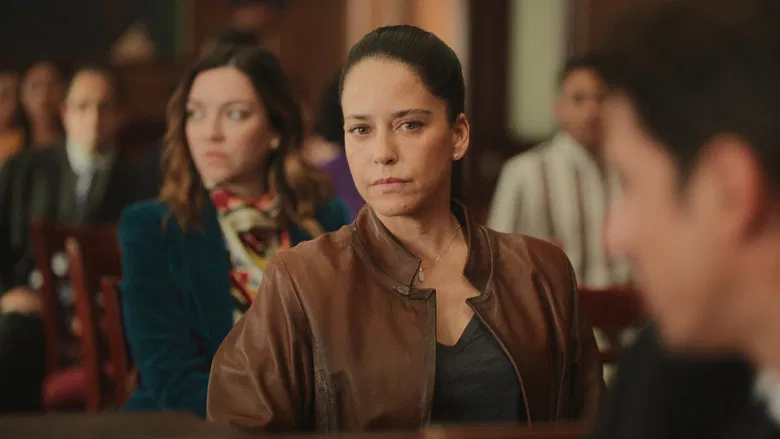
In our review of the Mexican global hit The Accident on Netflix, forgiveness stands out as the one thing missing when it matters most.
A single, irreversible accident sits at the center of the Mexican drama series The Accident (Accidente), but what truly drives the series across its first two seasons is not the event itself. It’s what follows. Suspicion spreads faster than grief. Trust erodes quietly, then violently. In a matter of days, relationships that once felt unshakable begin to collapse under the weight of blame, resentment and fear. In The Accident, what could have remained a shared tragedy instead becomes a slow, methodical dismantling of families and friendships.
From the outset, the series makes a clear choice. There is no clear villain, no satisfying culprit to absorb the community’s anger. The accident itself carries no single, undeniable responsibility. And precisely because of that, everyone becomes suspect. Parents turn on one another. Spouses redirect guilt inward and outward. Friends become enemies, not because they are evil, but because grief demands someone to accuse. Season 1 establishes this emotional fracture as its true subject: the moment when love gives way to the need to assign blame.

The Accident – All the key information
- Title: The Accident
- Original title: Accidente
- Format: Series
- Seasons: 2
- Genre: Drama / Thriller
- Country of production: Mexico
- Original language: Spanish
- Creator: Leonardo Padrón
- Directors: Klych López, Gracia Querejeta
- Lead cast: Ana Claudia Talancón, Sebastián Martínez, Alberto Guerra, Eréndira Ibarra
- Release dates: Season 1 – 2024 / Season 2 – December 10, 2025
- Platform: Netflix
Season 1 unfolds as a study in emotional escalation. Each reaction feeds the next, and every attempt to justify pain only deepens it. A wife blames her husband for failing to prevent the accident. A parent directs rage toward a friend who may have played an indirect role. Alliances shift, and moral certainty becomes impossible. The series doesn’t rush this descent. Instead, it allows resentment to ferment, showing how easily grief curdles into hostility when forgiveness feels unreachable.
Season 2 does not reset the board. It inherits the hatred fully formed in the first chapter and lets it continue its destructive course. By this point, the damage is no longer theoretical. Lives have been altered beyond repair, and in some cases, lost altogether. Forgiveness eventually enters the conversation, but only after the cost of withholding it has become unbearable. The irony is unmistakable: if forgiveness had arrived sooner, the series itself would have had nowhere to go. The narrative exists because reconciliation is delayed, resisted, misunderstood.
Critics have been blunt about the show’s excesses. The emotional load can feel relentless. Much of the storytelling follows familiar soap-opera patterns, and large portions of the series are undeniably predictable. Twists often land closer to telenovela logic than to pure thriller mechanics, and performances sometimes lean into heightened expression rather than restraint. For some viewers, that makes the show exhausting, even irritating.

And yet, dismissing The Accident entirely on those grounds misses what it’s actually attempting. This is a Latin American production that embraces emotional extremity as a storytelling language. The heightened reactions, the spiraling conflicts, the refusal to let characters take the rational path early on – all of it reflects a vision of how people truly behave when faced with irreversible loss. In that sense, the series feels less artificial than it first appears. The accident is not portrayed as fate or punishment, but as the unintended consequence of ordinary actions, and the real tragedy is how love unravels afterward.
Across both seasons, the show circles a simple but uncomfortable idea: blame feels easier than forgiveness, but it is infinitely more destructive. By the time mercy finally appears, it arrives bruised, tentative and late. The lesson is not delivered gently, and it certainly isn’t subtle. But within the excess, The Accident finds moments of genuine human truth – in the messiness, the cruelty, and the quiet recognition that hatred sustains nothing.
The Accident is not a prestige drama, nor does it pretend to be one. It is a melodrama rooted in grief, consequence and emotional fallout, and it commits fully to that identity. Whether that makes it unbearable or compelling depends entirely on the viewer’s tolerance for intensity. What’s undeniable is that the series understands one thing very clearly: unresolved pain does not fade. It multiplies.
The Accident is streaming now on Netflix.Watch on Netflix: https://www.netflix.com/title/81659092
