
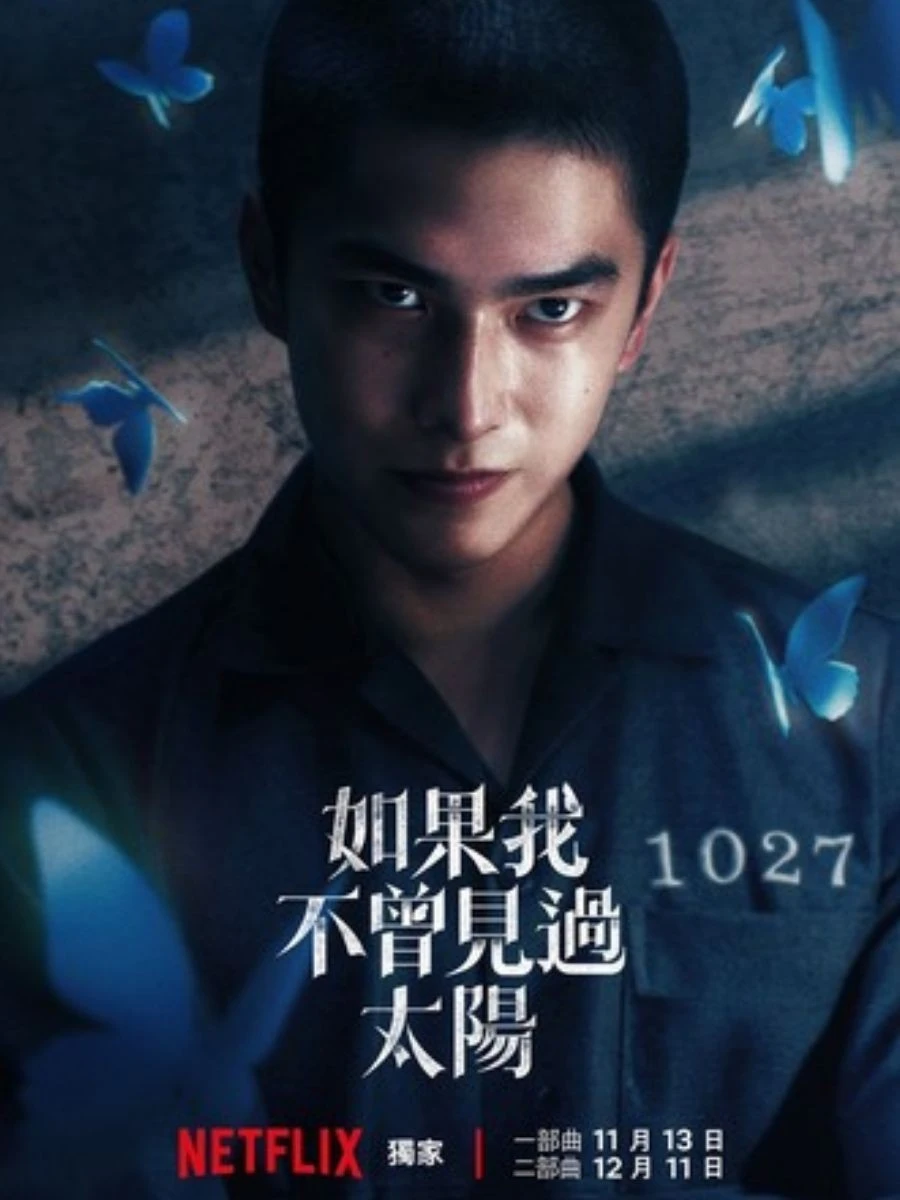
There is a silence at the center of this story that feels heavier than confession. He’s a serial killer. He’s already confessed to 10 murders. She knows it – yet she keeps sitting across from him, listening, waiting for something that never comes. Between them, a disturbing bond takes shape, built on attraction, guilt, and silences stronger than any truth. In this Taiwanese psychological thriller, love doesn’t redeem – it erodes, corrodes, and turns evil into something intimate and impossible to ignore.
Now streaming on Netflix, the Taiwanese psychological thriller Had I Not Seen the Sun unfolds as a mystery that resists easy labels. Part crime drama, part psychological thriller, part tragic love story, the series builds its tension through emotional unease rather than procedural logic. It is a story about guilt that refuses to fade, about love that turns corrosive, and about the cost of surviving when others did not.

Here is everything you need to know about Had I Not Seen the Sun – from the plot and cast to reviews and release date. The trailer is at the bottom of the article.
► You may also like: A fresh Netflix thriller kicks off 2026 with a new series adapted from the master of suspense, Harlan Coben
Had I Not Seen the Sun: All the key details
- Title: Had I Not Seen the Sun
- Original title: 如果我不曾見過太陽
- Format: TV series
- Seasons: 2
- Genre: Psychological thriller, crime, mystery, romance
- Country of production: Taiwan
- Original language: Mandarin Chinese
- Release date: November 13, 2025 (Part 1) – December 11, 2025 (Part 2)
- Director / Creator: Chiang Chi-cheng, Chien Chi-feng
- Lead cast: Tseng Jing-hua, Moon Lee, Lyan Cheng, Chiang Chi
- Produced by: Make a Deal International Production
- Platform: Netflix
What Had I Not Seen the Sun is about
In Had I Not Seen the Sun, directors Chiang Chi-cheng and Chien Chi-feng construct a world where perception itself is unstable. Drawing on the legacy of East Asian drama – suspended between spirituality and psychology – they fuse it with the narrative codes of a Netflix thriller, shaping a vision that blends emotional realism with a dreamlike sense of unease. Taiwan is not merely a backdrop here, but an essential part of the story’s atmosphere and meaning.
The series centers on Li Jen-yao, known as the “Rainstorm Killer,” a man who has confessed to a string of murders committed in his youth. Years later, his case resurfaces when Zhou Pin-yu, a young documentarian, secures an interview with him in prison. It’s an unexpected encounter that disarms her: the man is not the monster she imagined, but an enigma that stirs empathy and disquiet. What should be a controlled, professional encounter takes an unexpected turn, quietly destabilizing her sense of distance and control. From that moment on, her life splits in two: one side in the light of day, the other plunged into a constant slide into darkness.
► You may also like: Thriller fans, don’t miss this chilling Spanish movie – it’ll keep you on edge until the very last minute
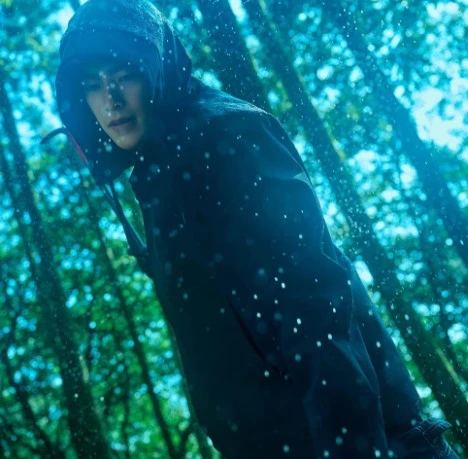
As the interviews continue, she is drawn into a disturbing inner landscape shaped by vivid dreams and encounters tied to Hsiao-tung, a deceased ballet student and the killer’s first love. As past and present begin to overlap, the series shifts away from reconstructing events and toward something more intimate, exploring how trauma continues to live, intrude, and reshape the present.
Making her search even more complex is the figure of Chiang Hsiao-tung, a girl in a school uniform who haunts her like an apparition suspended between innocence and horror. The series doesn’t offer easy answers: every vision, every nightmare, every fragment of memory leads to yet another layer of mystery, slowly bringing to the surface a tragic truth that ties the three characters together.
Had I Not Seen the Sun cast: the main characters
At the center of Had I Not Seen the Sun is a small ensemble whose performances are defined by emotional precision rather than overt dramatics. The series relies on restraint, asking its actors to carry trauma, guilt, and longing in glances and silences as much as in dialogue.
Tseng Jing-hua plays Li Jen-yao, the man known as the “Rainstorm Killer.” His performance avoids the usual markers of the genre. There is no theatrical menace, no attempt to dominate the screen. Instead, Tseng leans into stillness, presenting a character whose violence feels internalized, almost exhausted. The result is deeply unsettling, precisely because it refuses to explain or excuse. Tseng, previously recognized for emotionally complex youth roles in Taiwanese cinema, brings a similar introspective gravity here, allowing Li Jen-yao to exist as a presence rather than a puzzle to be solved.

Opposite him, Moon Lee portrays Zhou Pin-yu, the young filmmaker whose prison interviews become the series’ psychological fault line. Moon Lee’s performance is built on vulnerability and absorption. She plays Zhou Pin-yu as someone who listens too closely, whose empathy becomes a form of exposure. Rather than guiding the story, her character is slowly overtaken by it, and Moon Lee captures that erosion with remarkable control, letting doubt and unease seep in gradually rather than announcing them.
One of the most emotionally devastating presences in the series is Hsiao-tung, the young ballet dancer whose fate anchors the story’s trauma. Her performance has sparked particularly strong reactions from viewers, many describing genuine anger and grief while watching her scenes. The actress conveys terror, loss, and innocence with such immediacy that the character lingers long after she leaves the frame. It is a portrayal that does not ask for sympathy, yet commands it completely, becoming the moral wound around which the entire series revolves.
The cast moves with carefully measured intensity. Tseng Jing-hua gives Ren-yao a disarming fragility, a calm that hides an ocean of guilt — or perhaps innocence. Chiang Chi, as Pin-yu, moves through the story like a body on the edge: determined, vulnerable, lost.
Alongside them, Moon Lee is a specter that belongs neither to life nor death, the perfect embodiment of the show’s emotional symbolism. Rounding out the picture are Lyan Chen, Umin Boya, Yao Chun-yao, Nic Chiang, Biubiu Chen, Chris Lung, Jake Hsu, and Sonia Yuan.
Our review
The direction heightens the uneasy triangle at the heart of the series through an aesthetic built on dark corridors, fractured reflections, and recurring dreams. Images bleed into one another like an overexposed film, producing an almost hypnotic visual flow. Light becomes a language of its own: every glimmer, every shadow, every brief flicker speaks of solitude waiting to be “illuminated”, in quiet dialogue with the title itself, inspired by a poem by Emily Dickinson.
Had I not seen the Sun
I could have borne the shade
But Light a newer Wilderness
My Wilderness has made—Poem by Emily Dickinson
At its core, the Taiwanese series engages with universal themes – guilt, identity, and the impulse to confront what both attracts and frightens us. The title captures this tension precisely, framing light as revelation and as the fragile possibility of understanding darkness. The series explores these ideas without abandoning its romantic undercurrent, a constant emotional vibration beneath every scene, transforming the investigation into something intimate, unsettling, and deeply human.
When to watch the series on Netflix
The series is set to become one of the most talked-about Asian titles of the year on Netflix. Its appeal lies entirely in that boundary where love and terror seem to touch, and the viewer can do nothing but hover on the edge with the characters, caught by the same invisible thread that binds them. A narrative journey that perfectly reflects the direction of miniseries on Netflix, increasingly bold and rich in identity.
Netflix release date: Part 1 – November 13, 2025; Part 2 – December 11, 2025 ► WATCH ON NETFLIX
