
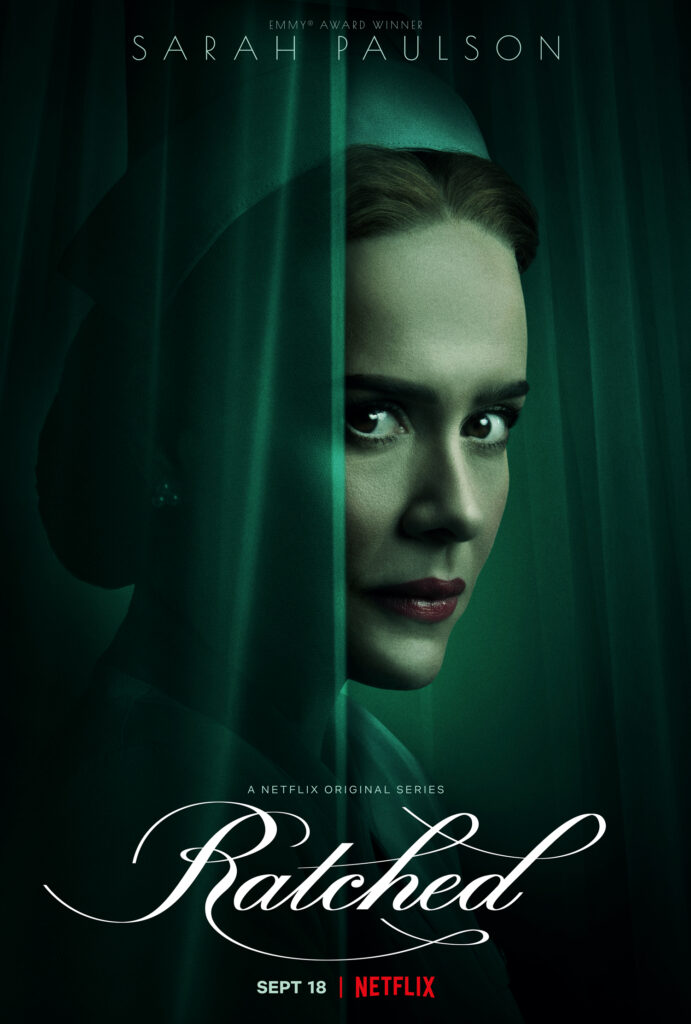
When Ratched debuted on Netflix, it did not simply revisit a familiar villain. It reintroduced one of the most unsettling characters in American fiction through a glossy, psychologically charged origin story that immediately stood apart from typical period dramas. Created by Ryan Murphy, the series pulls Mildred Ratched out of the shadows of One Flew Over the Cuckoo’s Nest and places her at the center of a world defined by secrecy, institutional power, and moral instability.
Anchored by a commanding performance from Sarah Paulson, Ratched blends psychological thriller tension with gothic melodrama and noir-inflected suspense, wrapped in a striking visual style that drew immediate attention on Netflix. From its provocative premise to its divisive reception, here is everything to know about Ratched on Netflix — including its story and cast. The trailer is at the bottom of the article.

Ratched: All the key details
- Title: Ratched
- Format: TV Series
- Seasons: 1
- Genre: Psychological Thriller, Drama
- Country of production: United States
- Original language: English
- Release date: September 18, 2020
- Creator: Ryan Murphy
- Developed by: Evan Romansky
- Lead cast: Sarah Paulson, Cynthia Nixon, Sharon Stone, Finn Wittrock, Judy Davis
- Platform: Netflix
What Ratched is about
Set in Northern California in 1947, Ratched follows Mildred Ratched as she begins working as a nurse at a state psychiatric hospital, a place where medicine, authority, and cruelty coexist behind a façade of order. Beneath her immaculate uniform and controlled demeanor lies a volatile inner life shaped by past trauma and an uncompromising need for control. As the series unfolds, the hospital becomes a microcosm of institutional power, exposing how systems designed to heal can instead normalize abuse when empathy is replaced by procedure and obedience.
Also read ► This film with Jessica Chastain left the Netflix audience speechless… And it’s a true story!
Much of Ratched’s impact comes from its carefully constructed aesthetic. The series is marked by an immaculate, almost clinical visual style, with a glossy cinematography. Isolated compositions, hushed interiors, and deliberate camera angles evoke a mood reminiscent of Edward Hopper’s paintings, where stillness amplifies unease and every space seems to hold unspoken anxiety. This stylization is not decorative; it reinforces the emotional repression at the heart of the story.
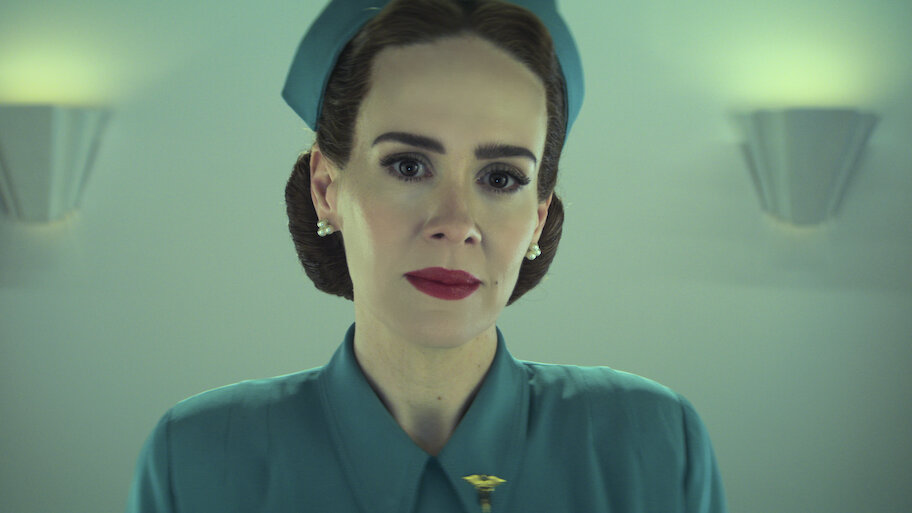
Rather than offering a conventional portrait of villainy, Ratched leans decisively into moral ambiguity. Mildred is shaped into a deeply unsettling antihero, someone whose actions resist easy justification and whose survival instincts frequently collide with ethical boundaries. The series examines repression, identity, corruption, and endurance through heightened drama and controlled bursts of violence, deliberately blurring the line between what feels right and what feels necessary. For some viewers, this unrelenting intensity can be emotionally challenging, but it is precisely this refusal to offer comfort or moral clarity that defines Ratched’s distinctive, often disquieting power.
The cast and performances
Sarah Paulson anchors the series with a performance that is both restrained and explosive, portraying Mildred Ratched as a woman constantly balancing vulnerability and menace. Paulson is known for her roles in American Horror Story, The People v. O.J. Simpson: American Crime Story, and Glass.
The ensemble cast includes Sharon Stone as Lenore Osgood, Cynthia Nixon as Nurse Gwendolyn Briggs, Finn Wittrock as Edmund Tolleson, and Judy Davis as Nurse Betsy Bucket, each adding to the show’s heightened emotional and psychological tension.
Ryan Murphy has described the series as an exploration of “what makes a monster, and whether monsters are born or created by the world around them,” framing Ratched as a character study rather than a simple origin story. Sarah Paulson has said she was drawn to the role because Mildred Ratched is “a woman surviving in a time and system that gives her almost no room to exist honestly,” emphasizing the contradictions that define the character.
Critical reception and viewer response
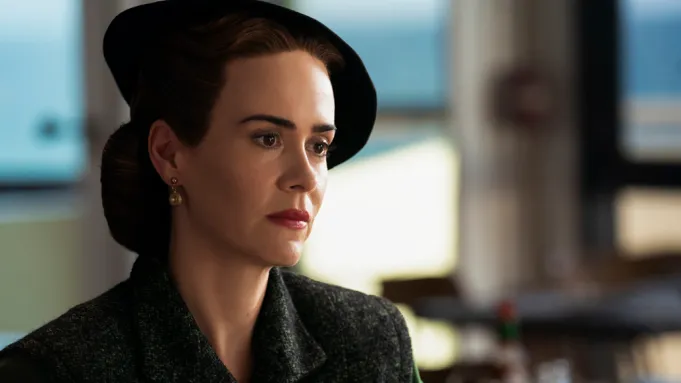
Ratched stands out above all for its aesthetic construction: the cinematography is immaculate, almost surgical, and the 1950s color palette turns every scene into a tableau of emotional tension. Isolated framings, hushed interiors, and carefully composed angles evoke the melancholy atmosphere of Edward Hopper, where each space seems to hold unspoken unease.
Sarah Paulson carries the entire narrative architecture, yet the series maintains an unflinching intensity that tests the viewer. The story deliberately bends moral boundaries, shaping Mildred into a disturbing antihero who is often impossible to fully side with. It is precisely this narrative harshness that leads some viewers to stop watching — not because of a lack of quality, but because of the emotional impact of a journey that offers no handholds or consolation, where right and wrong blur until the experience becomes almost painful.
Netflix charts and popularity
When Ratched debuted in September 2020, it entered Netflix’s U.S. Top 10 TV Shows and remained there for several days, reflecting strong early viewership. Netflix later confirmed that the series ranked among its most-watched new titles globally during its premiere period.
Is Ratched Based on a book?
Ratched is inspired by the character Nurse Ratched from Ken Kesey’s novel One Flew Over the Cuckoo’s Nest. The series itself is an original prequel and does not adapt specific events from the book.
Why Ratched is still worth watching
Ratched remains one of Netflix’s most visually distinctive psychological dramas. If you enjoy intense character studies and stylized storytelling in the vein of American Horror Story, this series is still worth adding to your watchlist.
Ratched release date on Netflix
Ratched premiered on Netflix on September 18, 2020. The single-season series is currently available to stream on Netflix. Watch on Netflix
