
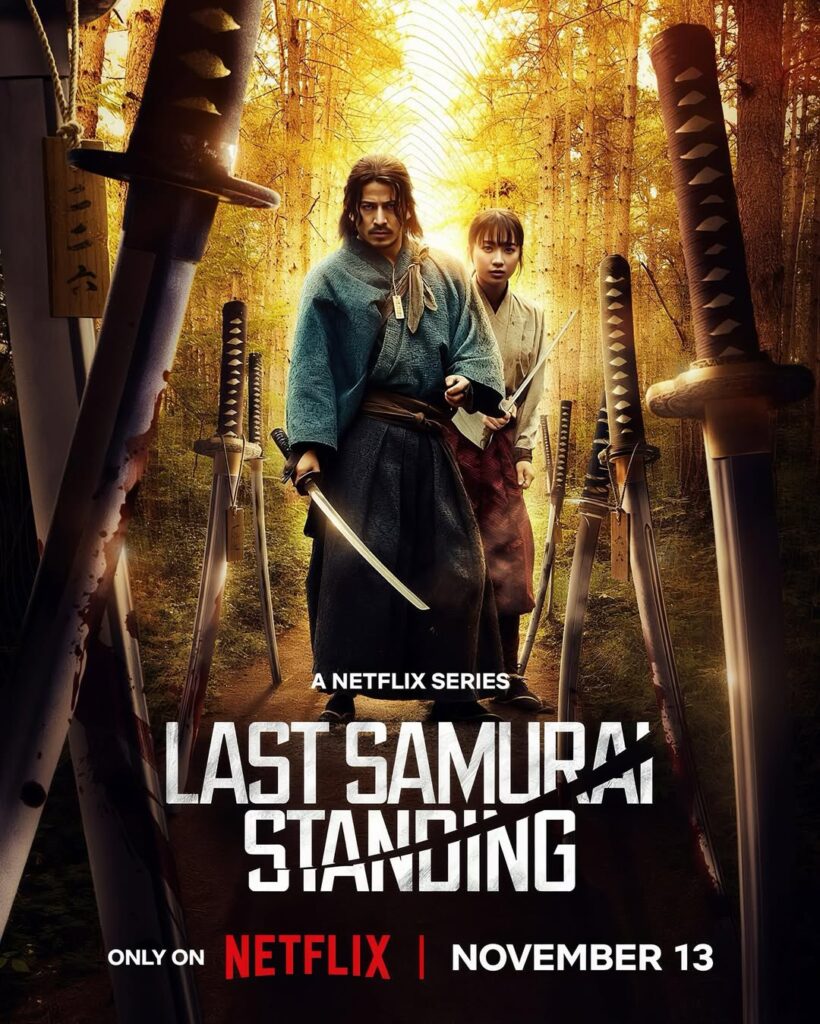
Netflix’s newest Japanese original, Last Samurai Standing, is rapidly becoming one of the most discussed international titles on the platform. Set in the turbulent aftermath of Japan’s samurai era, the series blends historical drama with brutal action and high-pressure survival storytelling – a combination that consistently resonates with U.S. viewers. With its visceral swordplay, sweeping period detail and emotionally charged character arcs, it delivers the scope of a samurai epic redesigned for modern streaming.
What’s fueling its rising visibility is the way it breaks from traditional period drama. Instead of idealized warriors bound by unshakable honor, the series drops 292 displaced samurai into a deadly contest shaped by desperation, shifting alliances and the psychological scars of a collapsing era. Viewers and critics have compared its tension to global hits like Squid Game, Alice in Borderland and Shōgun, but grounded in a uniquely Japanese historical moment.
As its momentum grows inside Netflix USA, interest is heightening around its cast, creators, themes and the real Meiji-era turmoil behind its story. Here is everything to know about Last Samurai Standing on Netflix USA – from the plot and performances to reviews, rankings and production details. The trailer is at the end of the article.
What Last Samurai Standing is about
Set in the late 19th century, during the early Meiji years, Last Samurai Standing imagines a Japan where the samurai class has been dismantled and thousands of former warriors are left adrift. At Kyoto’s Tenryū-ji Temple, nearly 300 of them answer a mysterious call: there is a game, a route from Kyoto to Tokyo, and a fortune so large it could transform not only individual lives but entire communities. The rules are brutal. Each samurai receives a numbered wooden tag. To move forward, they must take other players’ tags – by whatever means necessary – and reach Tokyo within a fixed time to claim a prize of 100 billion yen.
At the center of this “Kodoku” tournament is Shujiro Saga, a once-feared swordsman who joins not out of greed but desperation. A cholera outbreak has devastated his village; his family is sick, and the old codes of honor will not pay for medicine or food. Every decision he makes on the road from Kyoto to Tokyo is haunted by the question of what a samurai’s duty looks like when the world that created him no longer exists.
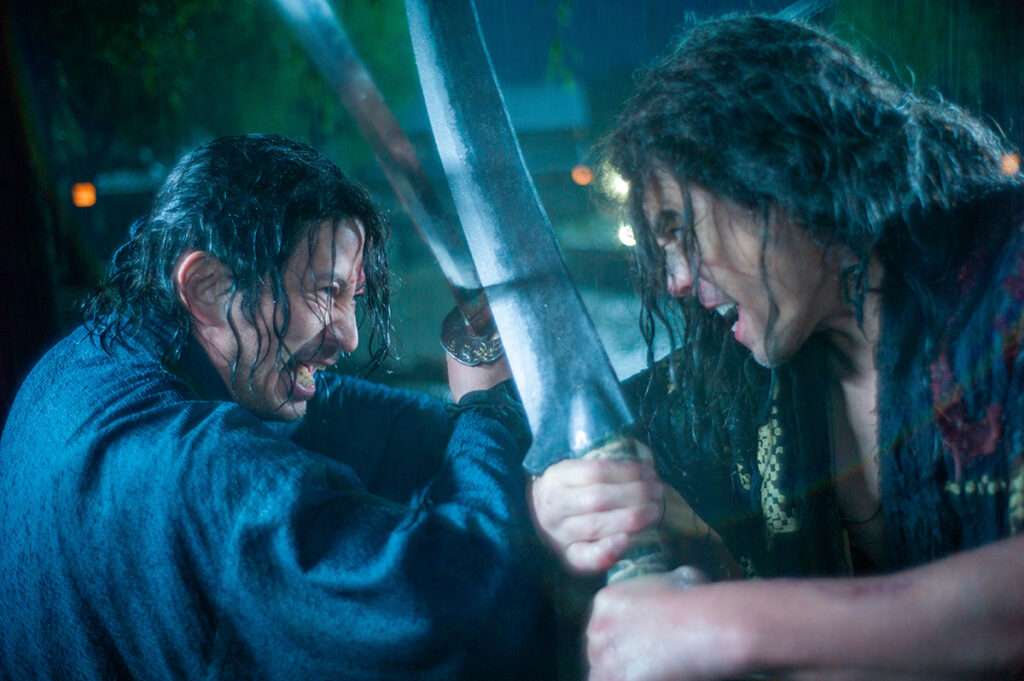
Rather than leaning on fantasy elements, the series keeps its horror grounded. Forests, roadside inns, fog-shrouded fields and cramped town streets become stages for ambushes, whispered deals and sudden betrayals. The violence is real and often shocking, but it is the quiet moments – exhausted warriors sharing food, broken men choosing whether to draw their swords one more time – that give the show its emotional weight.
The central characters and performances
Junichi Okada anchors the series as Shujiro Saga, delivering a performance that is both physically intense and deeply wounded. Known to many international viewers for his work in anime films like From Up on Poppy Hill and Tales from Earthsea, Okada brings that sense of interiority to a live-action role where almost every gesture feels weighed down by grief and duty. Off-screen, he also serves as producer and action choreographer, designing sword fights that feel heavy, risky and tactile rather than stylized.
Opposite him, Yumia Fujisaki is a genuine breakout as Futaba Katsuki, a young fighter whose determination and vulnerability give the series a beating heart. Just 17 at the time of release and already seen in Netflix film The Parades, Fujisaki turns Futaba into more than a sidekick or symbol; she becomes a lens on how the violence of the Kodoku game distorts youth and hope.
Kaya Kiyohara, who many Netflix viewers recognize from the body-swap series Switched, plays Iroha Kinugasa with a mix of steel and quiet hesitation, embodying a woman forced into a man’s war with her own agenda. Masahiro Higashide, familiar from The Confidence Man JP and other streaming titles, brings cool menace and strategic intelligence to Kyojin Tsuge, a figure whose loyalties are as dangerous as his blade.
Around them, a large ensemble – including Hideaki Itō, Gaku Hamada and Hiroshi Abe – fills out the ranks of schemers, idealists and hardened killers. What keeps the show compelling is that even the most ruthless characters are given moments of doubt or regret. There are no pure heroes here, only people pushed to their limits.
How Last Samurai Standing is performing on Netflix
Since its global launch on November 13, 2025, Last Samurai Standing has quickly turned from curiosity to bona fide hit. Within days of release, it surged into Netflix’s Top 3 series in the United States, with industry outlets describing it as one of the platform’s most impressive international debuts of the year.
As of today, Last Samurai Standing is no longer holding a position in Netflix’s U.S. Top 10 chart, but it continues to generate steady viewer interest through recommendations and genre-based surfacing. By contrast, the series remains far more prominent globally, where it is still performing strongly in several non-English-speaking regions. While it is not currently occupying the number-one spot worldwide, Netflix’s global data shows that the title continues to chart intermittently in the Top 10 Non-English TV category, particularly in Asia and parts of Europe, supported by ongoing conversation about its action choreography and historical themes.
Critical reception has been equally strong. On Rotten Tomatoes, the first season holds a rare 100% approval score from critics, with reviews praising its furious fight action, grounded emotional stakes and limited-series pacing. Game designer Hideo Kojima even singled it out on social media as a show he binged straight through and called “so good,” comparing its structure to a hybrid of classic samurai cinema and high-concept survival thrillers.
For Netflix, Last Samurai Standing is clearly more than just another niche import. It has become a key player in the streamer’s slate, holding its own next to major franchise titles and English-language crowd-pleasers.
Is Last Samurai Standing based on a true story?
The world of Last Samurai Standing feels unnervingly real, but the series is not a true story. It is adapted from Ikusagami, a best-selling historical fiction novel by Naoki Prize–winning author Shogo Imamura, which was later serialized as a manga in the magazine Morning.
Historically, the setting is accurate: the show unfolds during the Meiji Restoration, when the samurai class was being dismantled and Japan was rapidly modernizing under a new government. The poverty, dislocation and resentment experienced by former warriors draw on real social tensions of the late 19th century.
However, the Kodoku tournament itself – a lethal contest in which nearly 300 samurai must kill each other for a colossal prize – is fictional. Writers have acknowledged that the idea was partly inspired by a much older Japanese “insect duel” ritual, where insects were made to fight in jars, but there is no historical record of human tournaments on this scale. Real political figures and events are referenced to deepen the backdrop, yet the central conspiracy and characters are inventions crafted for drama.
Behind the scenes and production notes
Bringing Last Samurai Standing to the screen meant taking on the scale of multiple feature films in a single season. The adaptation reunites director Michihito Fujii with writer-director Kento Yamaguchi and action star Junichi Okada, who serves as creative director, producer and fight-choreographer.
The series was produced by Office Shirous in collaboration with Netflix and shot largely on location in Japan, with elaborate sets and detailed costuming that reflect both samurai tradition and the ragged poverty of the post-war years. Early in development, the creative team spoke about wanting to reinvent the classic jidaigeki – the Japanese period drama – as something that could stand shoulder-to-shoulder with modern genre hits. Fujii has described the production as equivalent to making “three movies in one,” with nearly 300 actors in period costumes and extensive practical stunt work.
You may like ► Ghosts, grief, and the iron road: Netflix’s Train Dreams transforms the American West into a dream of survival
Okada’s background in martial arts is visible in every fight sequence. Critics note that the action favors clear geography and physical impact over frenetic editing or heavy CGI, creating duels that feel both choreographed and brutal. That grounded approach, combined with Ko Omama’s tense score and a muted color palette, reinforces the sense of a world on the edge of extinction.
The show also had a prestige rollout before landing in living rooms. The first two episodes premiered in the On Screen section of the Busan International Film Festival in September 2025, signaling Netflix’s confidence in the series as a cinematic event, not just a content drop.
Why Last Samurai Standing is worth adding to your watchlist
What sets Last Samurai Standing apart is not just its body count, but its sense of mourning. This is a story about men who were trained to live and die by a code that no longer matters, and about what happens when that code is twisted into a blood sport for the amusement and profit of the powerful.
If you were gripped by the moral dilemmas and deadly games of Squid Game, drawn to the political and cultural complexity of Shōgun, or fascinated by the genre blend of Kingdom and other historical horror-action shows, Last Samurai Standing should be on your radar. It offers six tightly constructed episodes that reward binge-watching but linger long after the final sword strike.
All the key details about Last Samurai Standing
- Title: Last Samurai Standing
- Original title: Ikusagami (イクサガミ)
- Format: Limited series
- Season / Episodes: 1 season – 6 episodes
- Genre: Historical action, survival thriller, period drama
- Country of production: Japan
- Original language: Japanese
- Episode runtime: Approximately 47–58 minutes
- Release date on Netflix: November 13, 2025 (worldwide, including USA)
- Based on: Novel Ikusagami by Shogo Imamura
- Directors: Michihito Fujii, Kento Yamaguchi, Toru Yamamoto
- Creative director / Producer / Action choreographer: Junichi Okada
- Main cast: Junichi Okada, Yumia Fujisaki, Kaya Kiyohara, Masahiro Higashide, Hideaki Itō, Gaku Hamada, Hiroshi Abe
- Platform: Netflix
Release date, episodes and how to watch in the U.S.
Last Samurai Standing premiered worldwide on Netflix – including the United States – on November 13, 2025, with all six episodes available to stream. Watch on Netflix.
Watch the trailer
In the meantime, here’s the trailer.
